
Sources Behind South San Francisco Previous Residents
A house history needs two tracks. The recorder establishes title and transfers. Directories, census schedules, newspapers, permits, and probate material help identify people connected with the address. South San Francisco's records are split between city, county, library, court, and state custodians, so the best source changes with the era.
| Source | Years It Covers | Where Held | What It Shows |
|---|---|---|---|
| ACRE recorder books and Grantor-Grantee Index | County formation era onward; online cutoff not published | San Mateo County ACRE, Redwood City counter and online index | Title parties, recording dates, instruments, legal descriptions in the deed image |
| South San Francisco directory scans | 1907, 1929, 1938, 1940 | City Historical Articles and History Collection | Names, occupations, addresses, and sometimes street evidence |
| Enterprise Journal | 1895-1920 | City digital history collection | Moves, obituaries, businesses, announcements, and address clues |
| Federal census schedules | Public releases through 1950 | NARA and library genealogy databases | Household members, relationships, ages, occupations, and enumeration order |
| Sanborn fire-insurance maps | 1910 and 1929 local references | Grand Library, local history sources, and Library of Congress | Building footprints, uses, lot context, and physical change |
| City permits and planning files | Online period not officially stated | South San Francisco Building and city records request channels | Applicants, contractors, work descriptions, dates, and inspection history |
| Haines reverse directories | 1977-present reported by SFPL | San Francisco Public Library collection plan | Address-to-name clues for the later period |
Start with the parcel for a recent house history. Move to directories and census records for occupants, then use newspapers, permits, vital records, and probate to test gaps.
South San Francisco Previous Residents and APN House History
The APN, or assessor parcel number, is the durable key for a South San Francisco address. Open the San Mateo County Property Maps workflow, choose Find parcels by ADDRESS, and enter the street address. The result can link to an Assessor Map and available recorded maps. If the APN is already known, search by APN instead. Map downloads are free, while an official printed map comes through the recorder for a fee.
Save the APN, map reference, and exact situs address. A map shows parcel geometry, not who lived there. The APN links assessor, tax, permit, map, and deed systems even when a person or street number changes.
Trace South San Francisco Previous Residents Through Deed History
The deed chain answers who transferred title. It does not, by itself, answer who occupied the property. Use the current parcel and a recent vesting deed as the starting point, then move from each seller to the earlier purchase. The San Mateo County Assessor-County Clerk-Recorder and Elections office identifies the recorder route and counter at 555 County Center in Redwood City.
- Resolve the current street address to an APN and legal description through Property Maps.
- Find the current vesting document number or deed reference, then record its grantor, grantee, date, and instrument type.
- Search the grantor as an earlier grantee, narrowing the date range and document type.
- Match each candidate to the same lot, block, APN, co-owner, and legal description. Do not rely on a street name alone.
- When the online index or image trail stops, ask the recorder for older index books, deed books, or the correct series cutoff.
- Grantor
- The party conveying an interest, often the seller or prior title holder.
- Grantee
- The party receiving an interest, often the buyer or next title holder.
- Chain of title
- The linked sequence of recorded transfers that connects one title holder to an earlier one.
- Legal description
- The lot, block, subdivision, parcel-map, or metes-and-bounds language that identifies the land in the recorded instrument.
South San Francisco Previous Residents: Legal Descriptions Bridge Addresses
A modern street number may not exist in an early South San Francisco source. The city incorporated in 1908, and older records can use Baden, a ranch, an industrial work, a county road, or an unnumbered place. Later subdivisions and east-of-101 development created new address patterns.
Use the legal description and recorded maps to bridge the gap. Parcel Map and Recorded Subdivision Map references show how a lot was created. Sanborn indexes, directory street guides, city maps, and newspapers can connect an older label to a later parcel. No official citywide street-renumbering table was found, so no renumbering year should be invented.
Note: The same street address can hide a parcel split, unit suffix, or older lot description, so preserve every map reference in the research notes.
The South San Francisco Directory Ladder
Four city scans create a precise ladder for previous residents. The 1907 volume predates incorporation and captures the settlement and industrial community before city government. The 1929 volume follows an established civic core and subdivision period. The 1938 and 1940 volumes bracket the 1940 census and the wartime industrial shift. The verified scans are linked from the city's Historical Articles collection.
Read the alphabetical section, check same-surname entries at the address, and use a street section when present. Occupation, spouse, employer, and address together are stronger than a surname alone.
The full collection context belongs in the South San Francisco city directory material. For previous residents, use each scan as a dated checkpoint in one address trail.
South San Francisco Directory Years and Census
Directory data was often gathered before the imprint year, so a nearby census is a check rather than a perfect snapshot. A directory can show a name, spouse, occupation, and address. A census can add household relationships, ages, birthplace, and the order of homes along an enumeration route. Use both without treating either one as a current record.
- Compare the 1907 directory with the 1910 census, allowing for collection and publication lag.
- Pair the 1929 directory with the 1930 census and compare occupation, spouse, and street position.
- Use the 1938 and 1940 directories with the 1940 census, noting that a move may fall between the records.
- Search the Enterprise Journal run from 1895-1920 for notices, obituaries, businesses, and address changes that explain a gap.
- For later address work, ask about local phone books and the Haines San Mateo County reverse-directory run reported from 1977 onward.
Census schedules are public through 1950 under the 72-year rule. Name order, compound surnames, married names, transliteration, and old typesetting can vary, so keep alternate spellings and contradictions visible.
Sanborn Maps Date South San Francisco Buildings
Sanborn fire-insurance maps add a building layer to previous residents research. Local references identify South San Francisco sheets from 1910 and 1929. The maps can show a footprint, lot shape, construction clues, labeled uses, and the relationship between a building and surrounding parcels. They do not name occupants, and they should not be used as a substitute for a directory or deed.
Search the Library of Congress Sanborn Maps collection by city, year, and sheet. Compare it with the APN and recorded subdivision map, then use directories or newspapers for people. A 1910 footprint dates development, not the family or address occupant.
South San Francisco Permit Evidence
City permits are useful checkpoints in a house history. The South San Francisco permit channel can expose an address or permit number, applicant or contractor, record type, date range, work description, valuation, and inspection or final status, depending on the portal module. A permit applicant represented a project. That person may not have lived at the address.
Search the South San Francisco Building and permit service by address, APN, permit number, or date pair. If an old card or plan is not online, request the address, APN, permit type, and approximate era. Additions, demolitions, and lot changes can explain a directory gap or later address format.
No official online cutoff or citywide renumbering schedule was found. Use permits as dated work evidence, then confirm the parcel through maps and the recorder.
South San Francisco Court History
Probate can connect a deceased resident to heirs, a petition, an order, or a recorded distribution deed. Start with the Superior Court Public Records Index or Odyssey entry, then request a file or copy when the case and document are identified. A name-only court result is not enough to merge two South San Francisco people.
The San Mateo Superior Court Northern Branch page places local court services at 1050 Mission Road in South San Francisco. Records Management is at 400 County Center, Room A, Redwood City. A copy request needs the case number, parties, approximate filing date or document description, envelope, and a blank not-to-exceed check. The court replies within 30 days and does not research a vague request.
Remote indexes can show case number, type, filing date, parties, status, events, and document titles. Sensitive case types and documents may be restricted. Treat the index as a lead and confirm the file with the court.
For the physical branch and courthouse fallback, consult the San Mateo Superior Court Northern Branch service page.
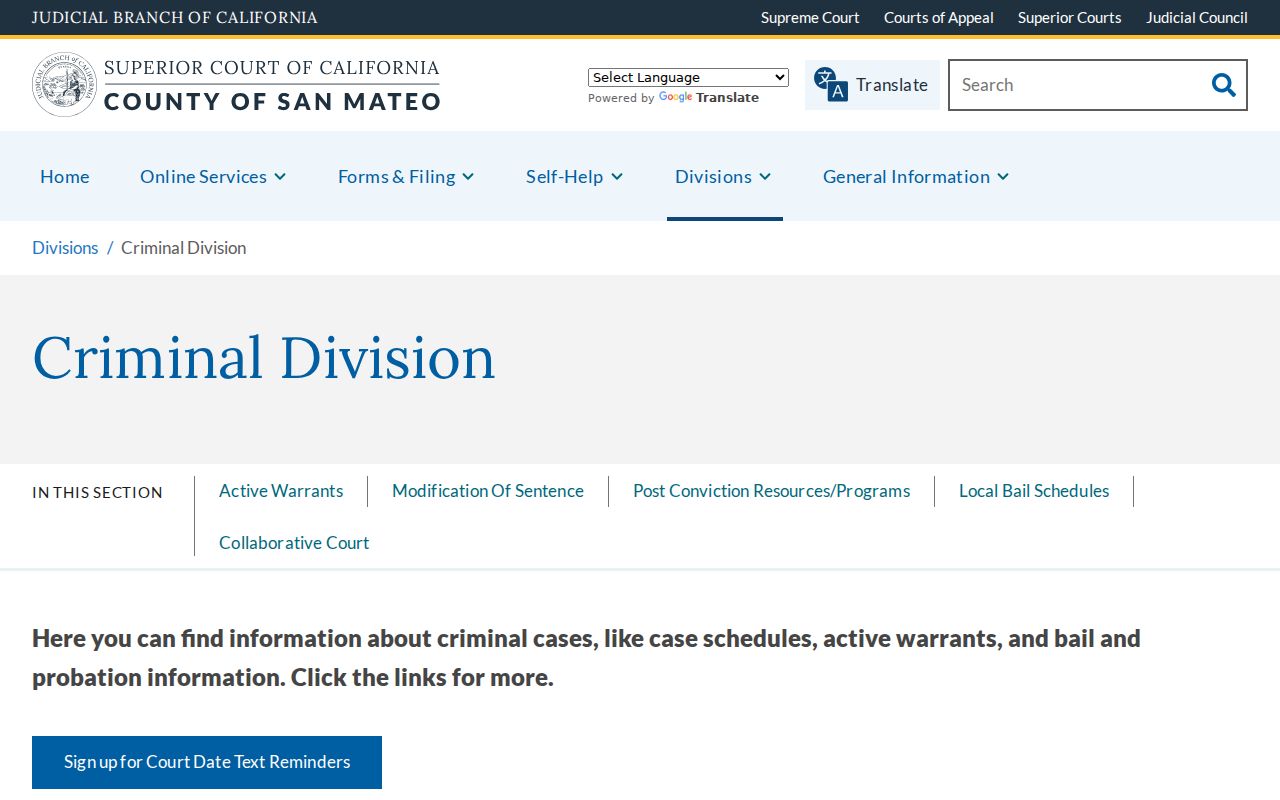
The court image supports the place-and-access check. It does not turn a public index into an unrestricted file or establish a resident's identity by itself.
South San Francisco Vital Records Close Trails
An obituary can supply a relative, former address, funeral detail, or move that a deed cannot. Test it against a death record, cemetery source, probate case, or recorded distribution deed. South San Francisco's nearby Colma cemetery landscape means a burial record may sit outside city limits.
The county Clerk-Recorder provides birth, death, and public marriage copies. Posted 2026 fees are $34 for birth, $26 for death, and $19 for marriage. Informational and authorized certified copies differ, with eligibility, sworn statements, notarization, and confidential-marriage limits for the authorized class. No open statewide public name index is offered.
Review the San Mateo County vital-record fee and copy information before ordering.
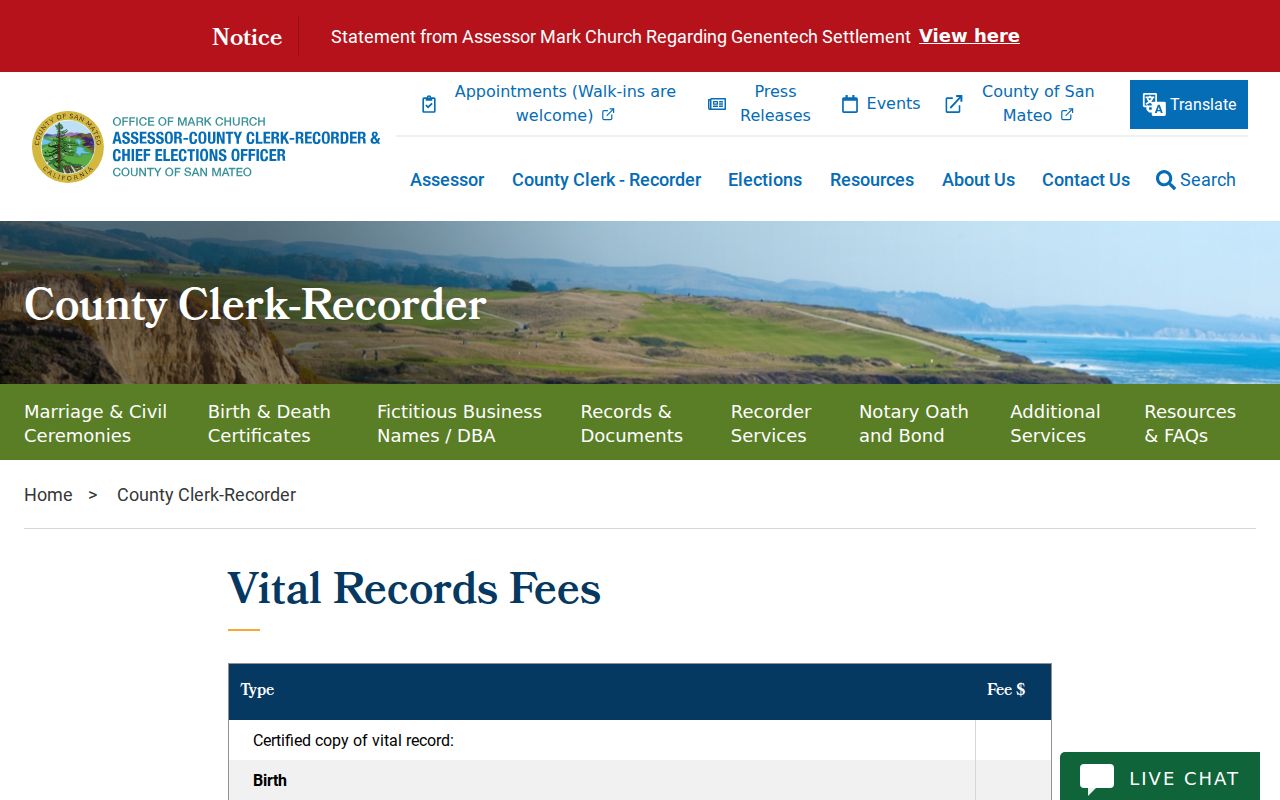
The county fee page is the right endpoint for a precise event request. A no-record result retains the search fee, so identify the person and event as closely as the sources allow first.
South San Francisco House-History Library Fallback
The Grand Avenue Library History Collection is the fallback when digitized years do not cover an address. The Carnegie branch at 306 Walnut Avenue holds yearbooks, newspapers, journals, government documents, maps, phone books, oral histories, books, and thousands of photographs. The History Room is not open for casual browsing. Staff coordinate access at (650) 877-8530 or history@ssfca.gov.
The Historical Society Museum at 80 Chestnut Avenue adds yearbooks, newspapers, maps, oral histories, objects, and a photo database, normally with Saturday afternoon access. Use public contact information, and ask for an exact phone-book or criss-cross year, abbreviation key, map sheet, or newspaper date range. The published directory years do not promise that every intervening volume survives.
Lawful house history. Previous-resident research is appropriate for family history, a documented property story, or personal curiosity. Public access does not permit following, threatening, exposing protected addresses, or harassing a living person. California Penal Code section 646.9 makes stalking a crime.
Identify the parcel, cite the record, separate owner from occupant, and preserve uncertainty where sources disagree.