
South San Francisco Directory Holdings
South San Francisco has a compact historical directory spine. Four local directories are digitized, while the Grand Avenue Library and Historical Society hold local print, image, and oral-history material. The verified runs and the less fully cataloged holdings belong in separate rows.
| Collection | Years/extent | Where held | Access |
|---|---|---|---|
| Digitized South San Francisco volumes | 1907, 1929, 1938, 1940 | City Historical Articles and History Collection | Digitized scans |
| Enterprise Journal | 1895-1920 | City digital history | Digitized newspaper run |
| Local telephone books | Exact run not published | Grand Library History Collection | Staff-mediated request |
| Haines reverse directories | 1977-present, as reported by SFPL | San Francisco Public Library | Ask for in-library access |
| Yearbooks, photos, oral histories | Unspecified years | Grand Library and Historical Society | Staff or museum access |
| State and federal history | Catalog-dependent | State Library and NARA San Francisco | Catalog, request, or appointment |
Only the four directory dates are verified online. For gaps, ask about telephone books, criss-cross runs, newspapers, or county directories instead of assuming a missing year means a missing record. A directory can list one subscriber or household head, not every person at an address.
The city's Historical Articles collection is the first source for the digitized South San Francisco directory scans.
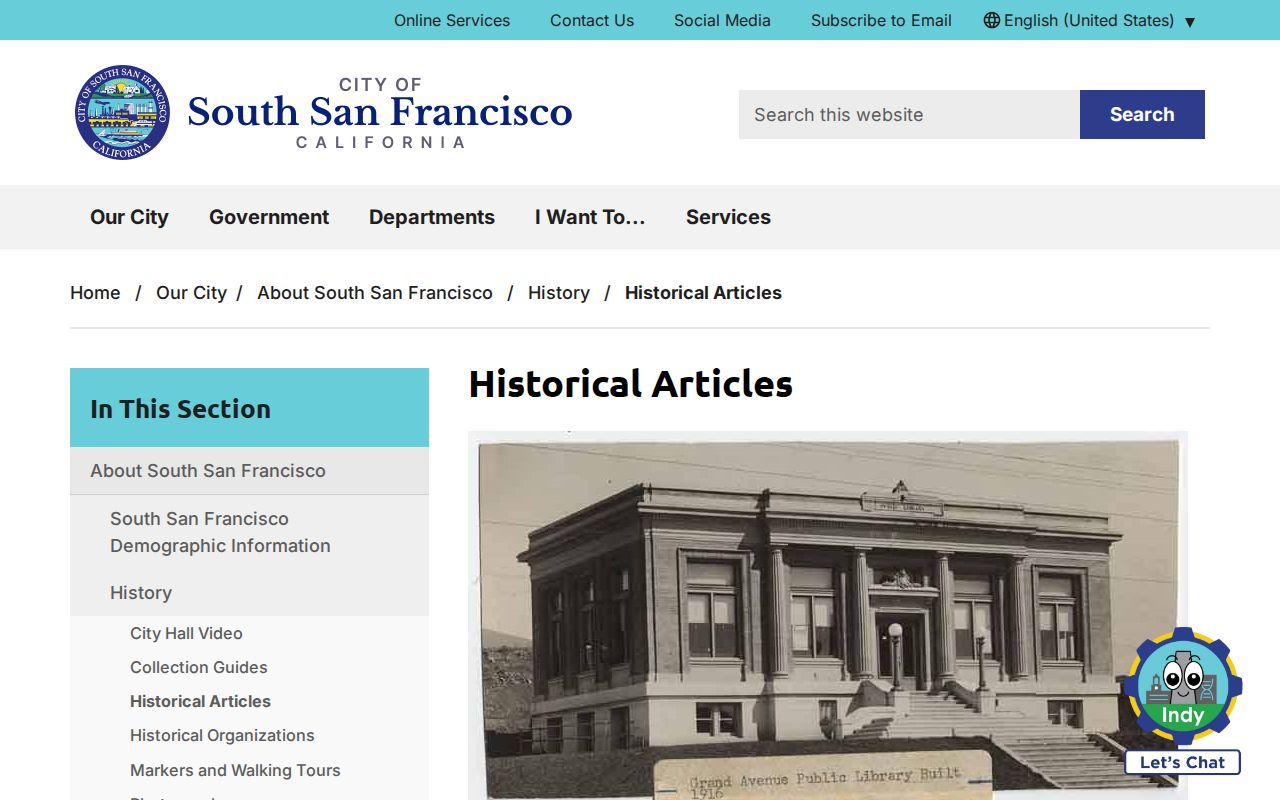
The first-party collection keeps directory scans beside local history context.
The 1907 South City Directory
The 1907 South San Francisco directory predates the city's 1908 incorporation. It is a community snapshot, not a record made by later city government. Entries may use Baden, a ranch, an industrial work, a county road, or an unnumbered place instead of a modern street label.
San Mateo County formed in 1856 from San Francisco County territory. A pre-incorporation resident may therefore appear in county, federal, church, newspaper, or naturalization material. The County Clerk lists naturalization certificates from 1800-1991, making the 1907 spelling and occupation useful clues for a later request.
| 1856 | San Mateo County formed. |
|---|---|
| 1895-1920 | Enterprise Journal bridges the early years. |
| 1907 | Directory snapshot before incorporation. |
| 1908 | South San Francisco incorporated. |
| 1929-1940 | Three later digitized directory checkpoints. |
| 1977-present | SFPL reports Haines reverse directories. |
The California State Library history collections can test whether an early listing belongs to South San Francisco, another San Mateo community, or the separate City and County of San Francisco.
State catalogs help bridge the jurisdiction before the city name became stable.
South City’s Three Digitized Directories
The 1929, 1938, and 1940 South San Francisco city directories form a useful comparison set. Check the same surname, address, occupation, spouse notation, and nearby names in each scan. A changed number may reflect a move, a new subdivision, or an address shift, so confirm it with a street guide, map, or newspaper.
Pair 1929 with the 1930 census and 1938 and 1940 with the 1940 census. The 1907 volume pairs with 1910. Directory information was often gathered before imprint, so a one-year difference is normal. Grand Avenue, Baden Avenue, Sign Hill, the railroad, western subdivisions, and east-of-101 campuses belong to different development eras and help explain address continuity.
Early listings may name a ranch, industrial works, county road, or Baden location instead of a numbered street. Later westward subdivisions and east-of-101 campuses introduced new parcels and mailing patterns. Use the directory street guide, Sanborn sheet index, and recorded subdivision map before treating two address forms as the same place.
Reading a South San Francisco Directory
A South San Francisco city directory entry usually puts the surname first, then a given name or initial. Spouse, occupation, employer, address, and a widow notation can follow. Some editions mark an owner, renter, boarder, or roomer. Find the abbreviation page before expanding a symbol.
| Name | Surname, given name or initial, and possible spouse or relative. |
|---|---|
| Occupation | Work or employer, often shortened. |
| Address | House number and street; “r” and “h” commonly mean residence and home. |
| Status mark | Owner, renter, boarder, or roomer mark when the edition uses one. |
| Widow notation | “Wid” can identify a deceased spouse. |
| Business entry | Commercial address, not proof of a home. |
- Criss-cross directory
- An address-first or street-order section linking a house number to a listed occupant.
- Householder index
- A name list usually centered on the household head.
- Abbreviation key
- The volume legend for short forms and symbols.
Use spouse, street, occupation, employer, and nearby names to separate surnamesakes. Keep the printed spelling because old type can change initials, punctuation, diacritics, and surname order.
Grand Library South City Directories
The Grand Avenue Library, a Carnegie branch at 306 Walnut Avenue, keeps local telephone books, maps, clippings, photographs, oral histories, government documents, and other directory leads. Its History Room is closed to casual browsing, but staff arrange research at history@ssfca.gov or (650) 877-8530. Give the surname, address, approximate year, and desired record type.
Ask whether a target year is digitized, in print, on microfilm, or in a related file. The Main Library is at 901 Civic Campus Way; the local-history desk is the better route for sparse middle years. The library page supplies current branch contacts and hours.
A staff request can also connect a directory entry to a clipping, map, photograph, or oral-history reference. That companion evidence may explain a move or a name change without treating a single listing as a complete household record.
Staff access keeps the four online scans from being mistaken for the whole collection.
Note: Ask for the volume's street and abbreviation sections before assuming an alphabetical scan covers every address.
Enterprise Journal and Directory Gaps
The digitized Enterprise Journal run from 1895 through 1920 fills the space around the 1907 directory and 1908 incorporation. Notices, obituaries, church and school items, business news, and civic events can connect a name to a street or relative. Search the name and address, then read the surrounding item.
A newspaper is not a resident roll. Confirm an important lead with a directory, census, deed, probate file, or vital record. Colma's cemetery landscape means a South San Francisco burial may sit outside city limits. A name disappearing from one directory can mean a move, death, omission, or changed listing.
City clerk files can add council, ordinance, contract, and correspondence context when a directory name appears in civic material. A request should identify an existing record series, address or spelling, date range, and desired format.
Note: Keep the newspaper date, printed spelling, and page reference so another source can test the lead.
South City Reverse Directories
The four digitized South San Francisco city directories do not promise a continuous street-order run. Grand Library phone books may fill a gap, and SFPL reports Haines San Mateo reverse directories from 1977 onward. Those later volumes add an address-to-name path to the sparse early scans.
Ancestry Library Edition is available in library, HeritageQuest can be remote for eligible cards, HeritageHub supplies obituary material from 1704 onward, and My China Roots supports Chinese genealogy, immigration, burial, and zupu research. Use a database result as a lead and compare its name, address, spouse, and era with a local source. The Peninsula genealogy resources page explains current access.
Old telephone listings often name one subscriber, not everyone at the address. Name order, compound surnames, transliteration, and missing diacritics can change a search result, so keep both the printed form and a reasonable alternate form.
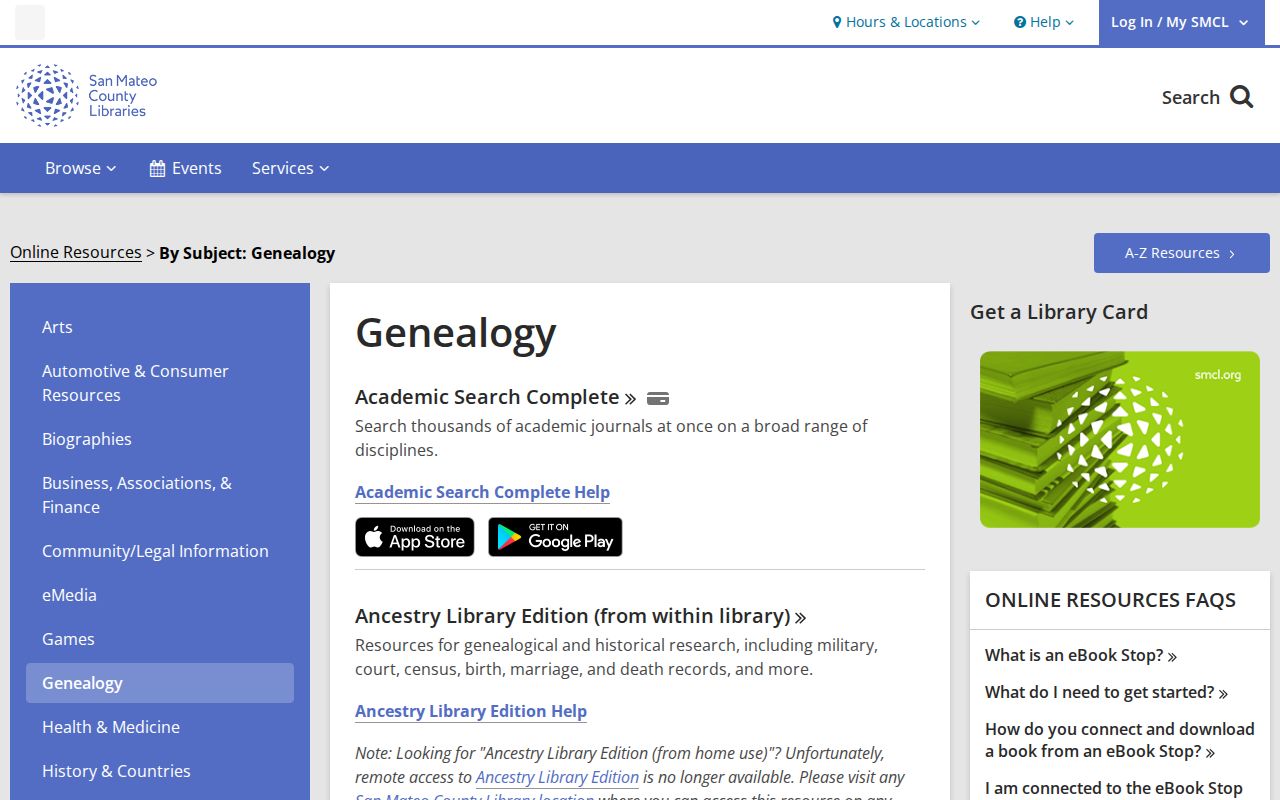
Library databases bridge the long interval between printed South San Francisco directory scans.
South San Francisco Directory Companions
The Historical Society Museum at 80 Chestnut Avenue holds yearbooks, newspapers, maps, oral-history tapes, objects, and a searchable photo database. It is normally open Saturdays from 1 to 4. The Plymire-Schwarz Center at 519 Grand Avenue preserves a 1905 home context. Public contacts are research leads, not permission to republish member information.
Yearbooks can reconnect a classmate to a school and year; photographs and oral histories can supply a street, nickname, employer, or family clue. The city's historical organizations page identifies the local connections.
The Grand Library and museum work as two physical anchors near the old civic core. Their collections can add neighborhood, school, and family context to the industrial-city story without turning private membership or alumni information into a public roster.
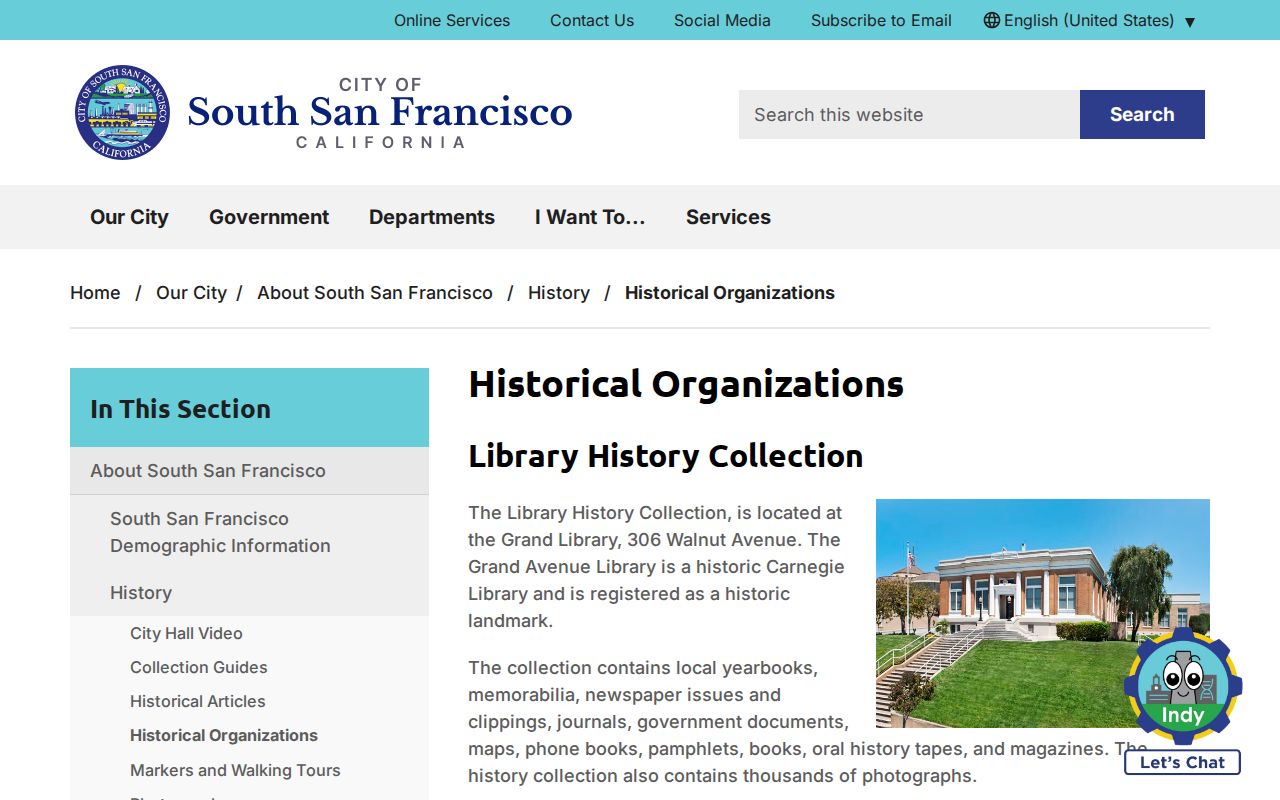
The museum layer adds human detail to a South San Francisco directory entry.
Trace a South City Directory Household
Use the directory as a sequence of tests. Record the entry, then build outward through address, nearby names, census, newspaper, and property evidence.
An identity matrix helps when a surname is common. Record the printed spelling, initials, spouse, occupation, employer, address, and era, then require at least two non-name details before combining entries. A directory can show an occupant or subscriber; the assessor and recorder answer different ownership questions.
- Write the printed name, spouse, occupation, address, and status mark; check the abbreviation key.
- Search the next available directory for surname and initial variants.
- Read the street or criss-cross section and note adjacent households.
- Pair 1907 with 1910, 1929 with 1930, and 1938 and 1940 with the 1940 census.
- Use the Enterprise Journal, obituary, probate, yearbook, or oral history to explain a change.
- Compare a modern address with subdivision maps, Sanborn sheets, permits, and legal description before assuming continuity.
The South San Francisco permit service can show an applicant, contractor, work type, issue date, final date, or inspection status. For an older file, the city public-records channel needs a department, address, date range, and existing record series. A permit applicant is not proof of residence.
The NARA San Francisco archives extend a family trail through federal census, immigration, naturalization, military, and federal-court records. The State Library and NARA use catalogs, identifiers, and appointments.
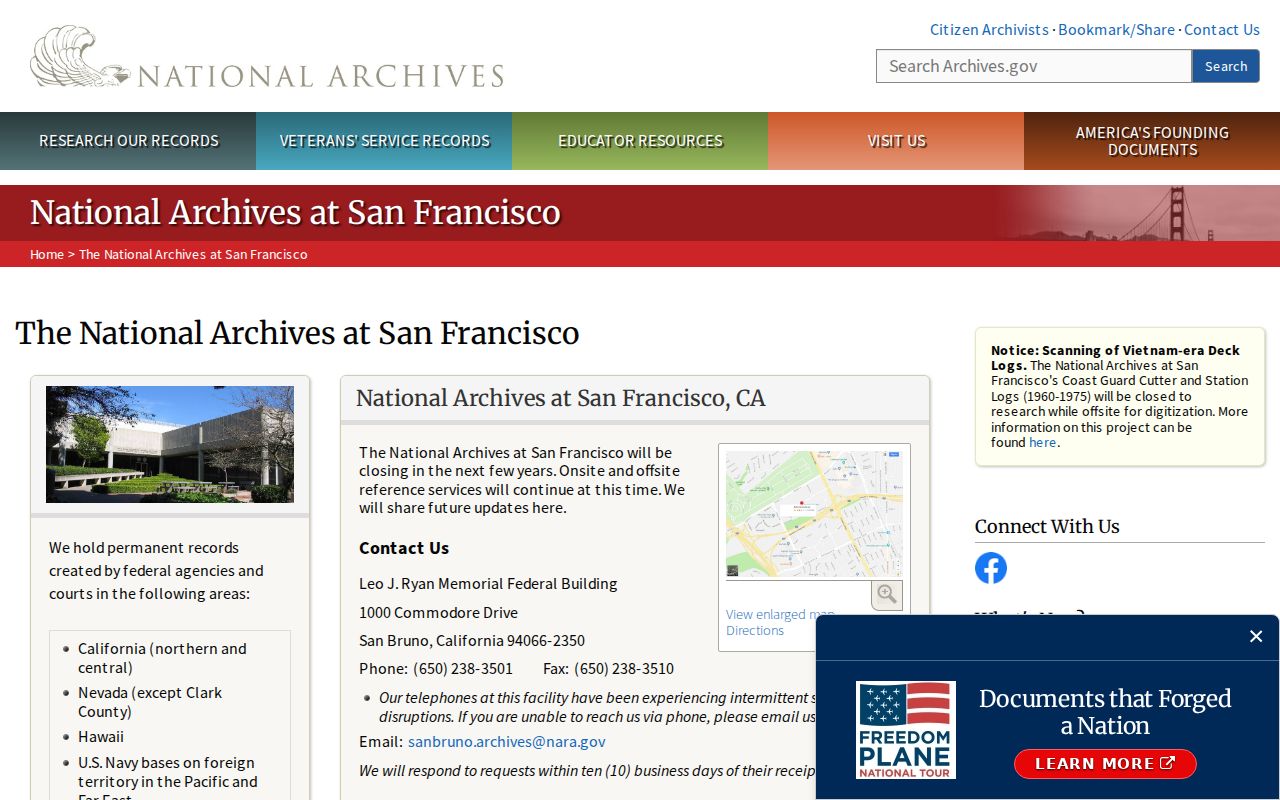
Federal holdings can explain a South San Francisco directory household's migration when local print evidence stops.
Lawful personal research. Use directory names for family history, civic research, and other lawful purposes. Do not stalk, threaten, harass, impersonate, or expose protected information.